Abraham’s Hill and Riverside Hair show the real customer situation, the system built for it and the current release boundary.
Five pieces of work you can inspect—including what is not finished.
Some are internal systems. Two were built around a specific person or business. Each record shows the problem, what was made, how it works, what changed and the limit that still matters.
A work record should show the result and name the limit.
The learning system and Forge show actual interfaces, controls and workflows rather than a list of claimed capabilities.
Keystone Quant is labelled internal. Its data and licensing gaps remain visible, and no investment-performance claim is made.
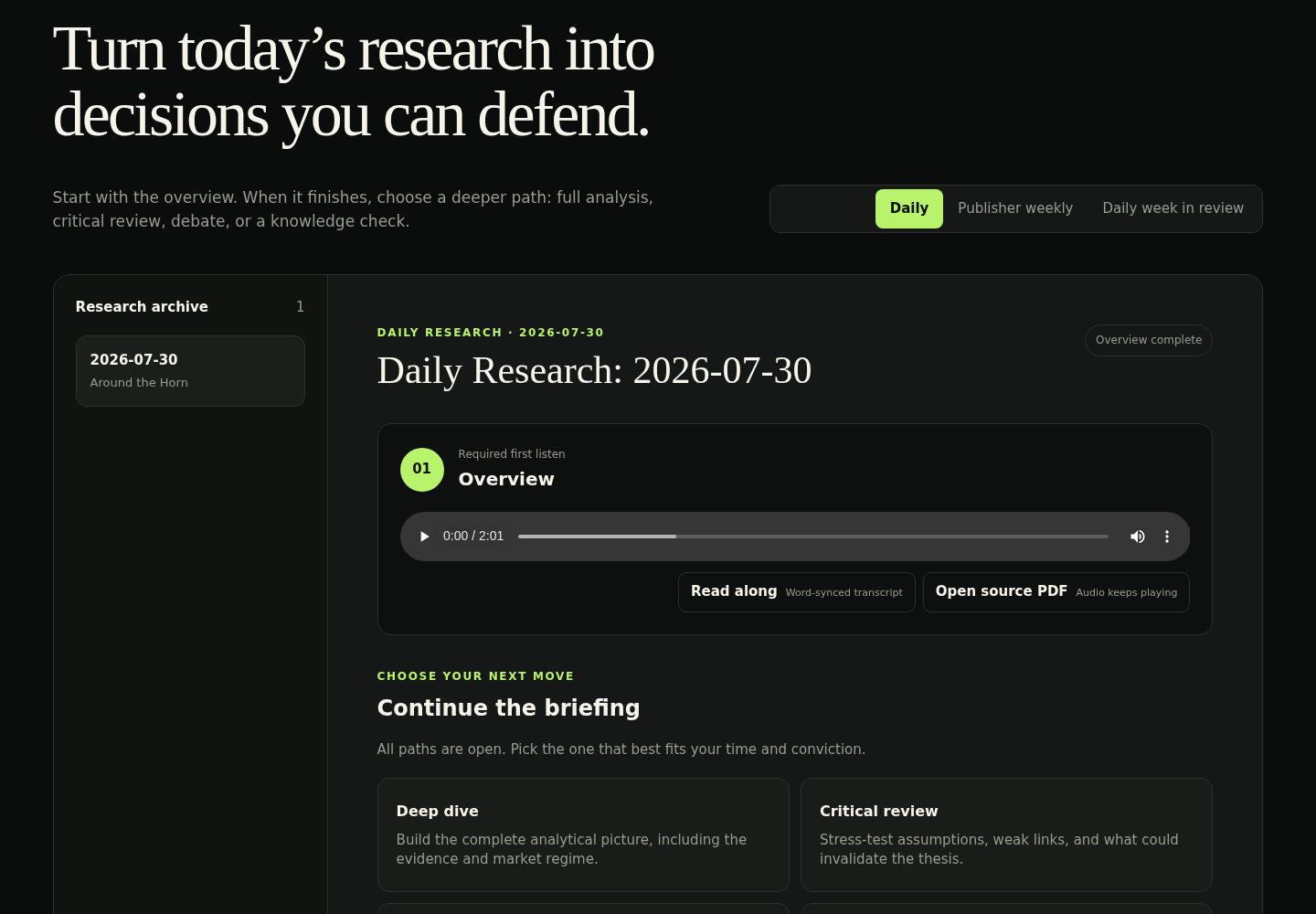
014 listening routes
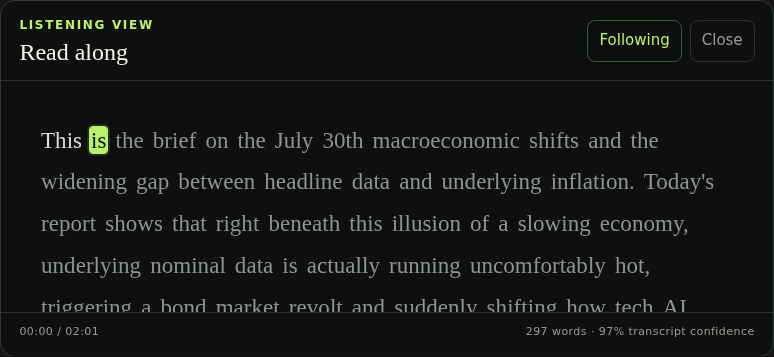
02Word-synced read-along
032 practical labs
- Dual learning
- Real audio and a 297-word transcript move together, word by word.
- Judgment
- Every lesson names counterevidence and the condition that would break the reading.
- Learning paths
- Overview, deep dive, critical review, debate and a ten-question check.
- Publication gate
- Source, audio, transcript, lessons and practicals are validated before release.
The work that needed changing
Dense research is easy to consume passively and just as easy to forget. A short summary loses the reasoning; a long document gives the learner no help deciding what matters or where the argument is weak.
What I built and why
I built a private Research Lab that turns a validated source pack into four listening routes, a word-synced transcript, a three-chapter lesson, a knowledge check and two chart practicals. Every claim can keep its source, counterevidence and failure condition attached.
How it works
A source document is checked and turned into an evidence brief. The learner starts with a two-minute overview, reading the same words as they hear them. That opens the deep dive, critical review, debate and quiz before the learner tests the argument on a chart.
What changed
One research report becomes several ways to learn without losing its lineage. Reading and listening together gives the learner two routes into the same idea; the critique and practical work make them do more than accept a polished AI summary.
The honest limit
The system organises evidence and practice. It does not replace the learner's judgment, and private or licensed source material remains private.
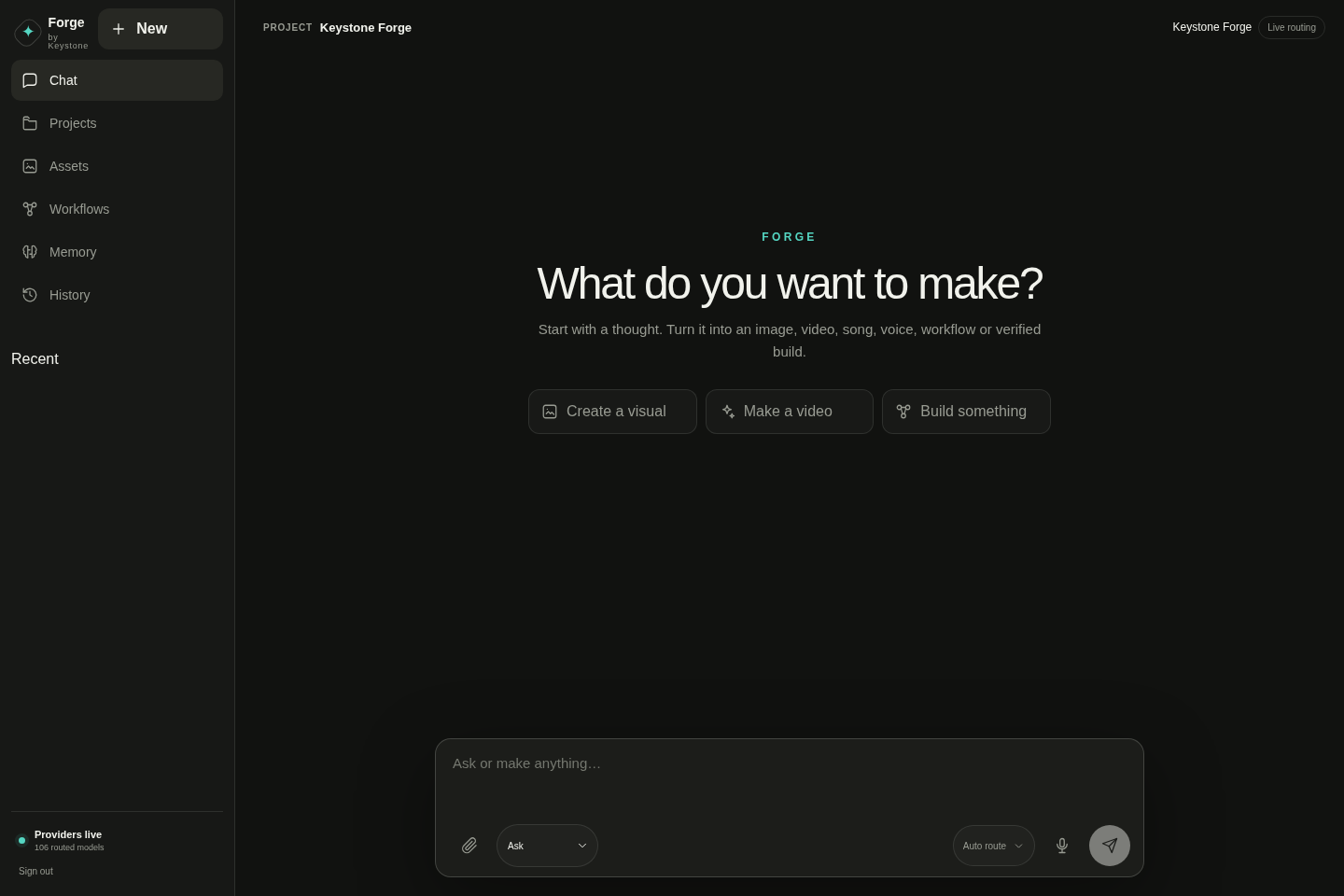
017 creation modes
0212 workflow bridges
03Approval before spend
- Model intelligence
- Compare provider, capability, context, evidence and price for the job.
- Generation review
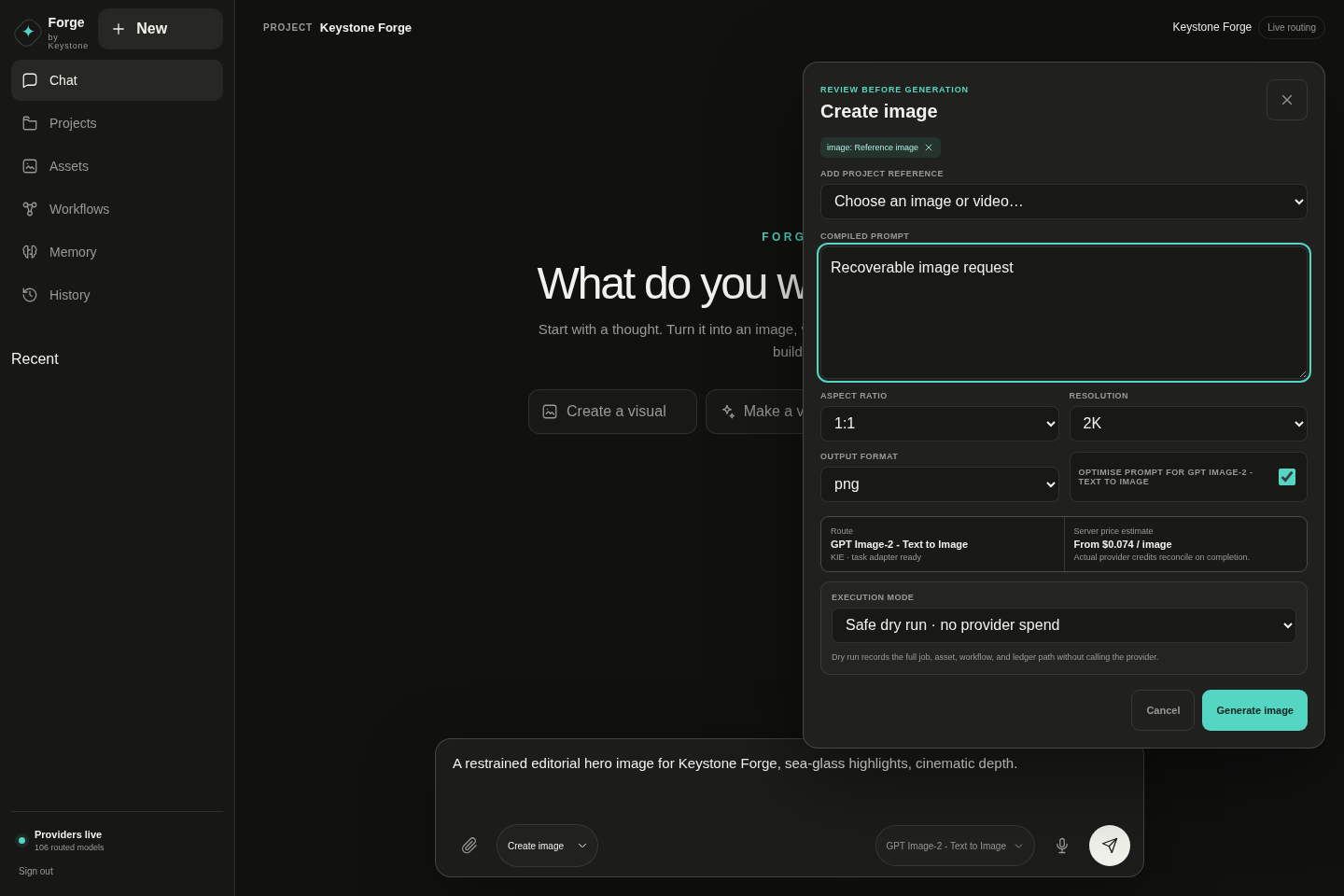
- See prompt, references, aspect, resolution, model route and estimate before running.
- Cost control
- Credit holds, charges, refunds and idempotent retries are designed into execution.
- Project memory
- Briefs, reusable assets and provider lineage stay attached to the work.
The work that needed changing
Moving between separate AI tools loses the project brief, the references, the reason a model was chosen and the real cost of the work. A good-looking output can arrive with no dependable route for review or reuse.
What I built and why
I built one workspace with project memory, seven creation modes, provider and model comparison, reusable references, generation review, cost controls, approval steps and asset lineage. Text, image, video, music, speech, builder and workflow work can live in the same project.
How it works
The user opens a project, chooses the job, adds instructions and references, then reviews the exact model, settings, format, estimated price and execution mode. Nothing chargeable has to run until that review is approved. The finished asset keeps the provider and project trail attached.
What changed
Model choice becomes a visible decision instead of tab switching. The same workspace can move from an image to a voiceover or a wider workflow while preserving the brief and showing where money may be spent.
The honest limit
The local system and review controls are working. Some provider routes still require production credentials or remain in safe-run mode, so the interface says that instead of implying every route is live.
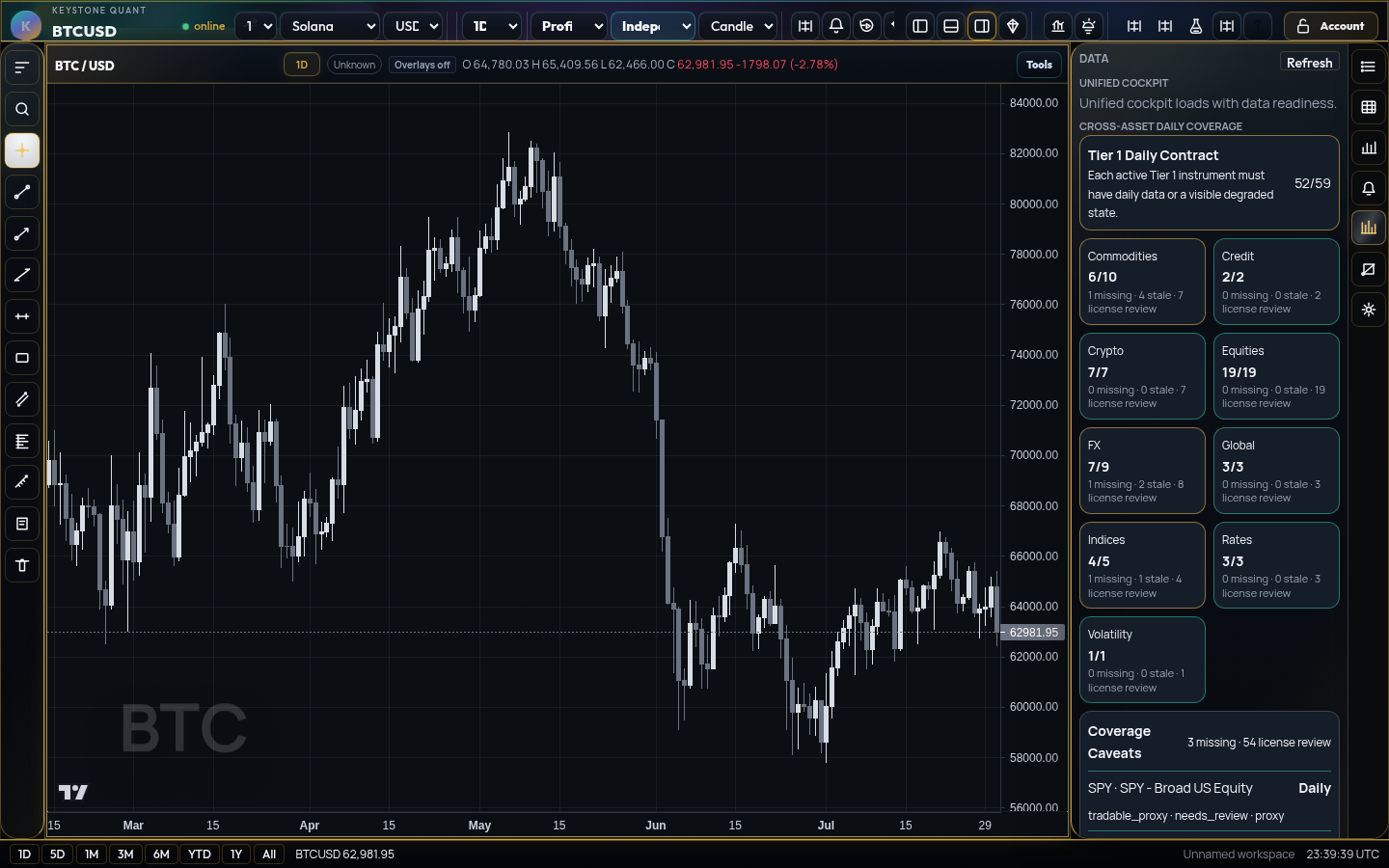
019 asset groups
02Data-readiness contract
03Missing states stay visible
- Coverage
- Crypto, equities, rates, credit, FX, commodities and macro sit in one research view.
- Two working modes
- Research for investigation; replay for checking how an idea behaved through time.
- Evidence states
- Available, missing, stale and licence-review states remain visible to the user.
- Decision control
- A failed evidence check can block the process instead of being buried in a footnote.
The work that needed changing
Financial research becomes dangerous when a clean chart hides a missing series, stale observation, licensing restriction or disagreement between sources. The unknowns need to survive all the way to the decision.
What I built and why
I built an internal charting and research workspace with cross-asset coverage, research and replay views, source and licence checks, staleness states and a readiness contract that can stop weak evidence being promoted as a signal.
How it works
Incoming data is checked for coverage, recency and permitted use before it reaches the research screen. Analysts can inspect the chart and supporting context while gaps remain visible. A blocked or unknown state cannot silently become an approved conclusion.
What changed
The tool makes the quality of the evidence inspectable at the same moment as the market view. It is useful precisely because it can say that a series is missing, stale or still under licence review.
The honest limit
This is internal research, not a public trading product. I am not claiming investment performance or live execution, and source and licensing gaps remain explicitly open where they have not been resolved.
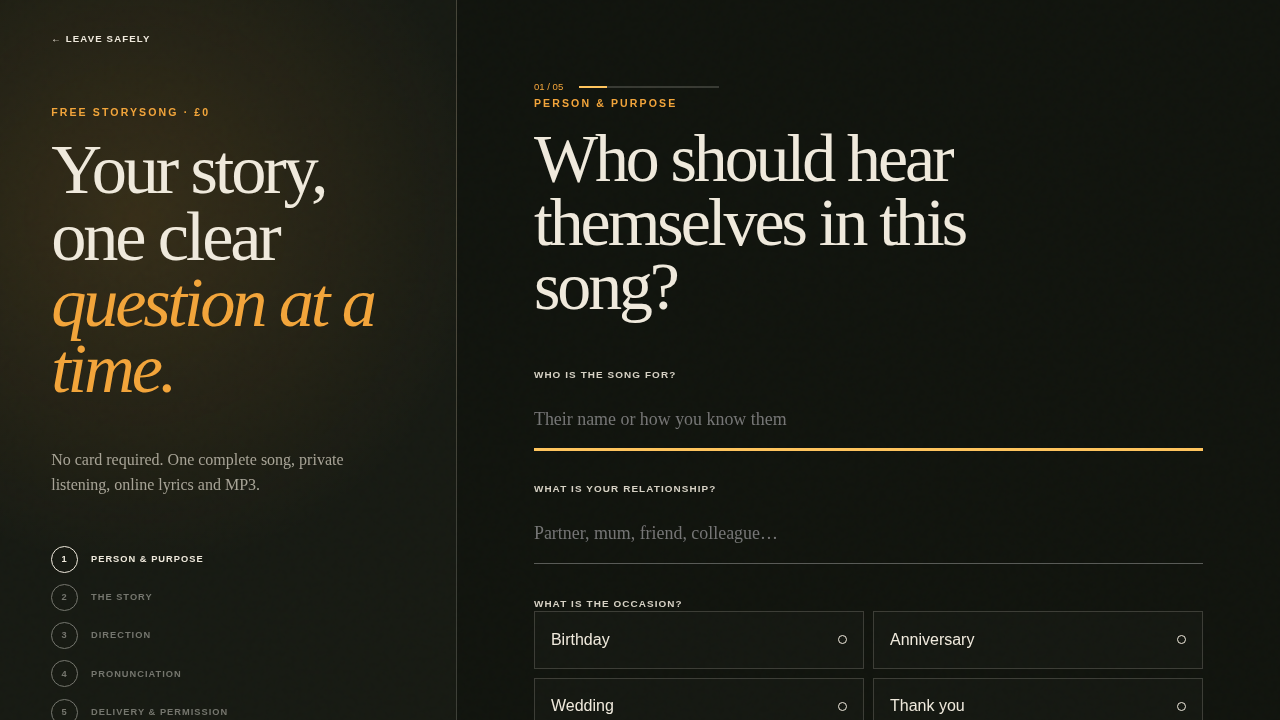
015-stage song brief
02Verified-email lead route
03Private song delivery
- Creative intake
- Story, exact phrases, things to avoid, intended feeling, sound and pronunciation.
- Real generation route
- A provider adapter handles song generation, polling, downloads and usage limits.
- Human quality gate
- A generated track is reviewed before the customer receives it.
- Private by default
- Saved drafts, protected audio and private delivery keep personal stories controlled.
The work that needed changing
My friend wanted to write songs but struggled to get from the feeling in his head to lyrics, direction and a finished track. He also needed a public home for the music and a clear way for other people to ask for a song of their own.
What I built and why
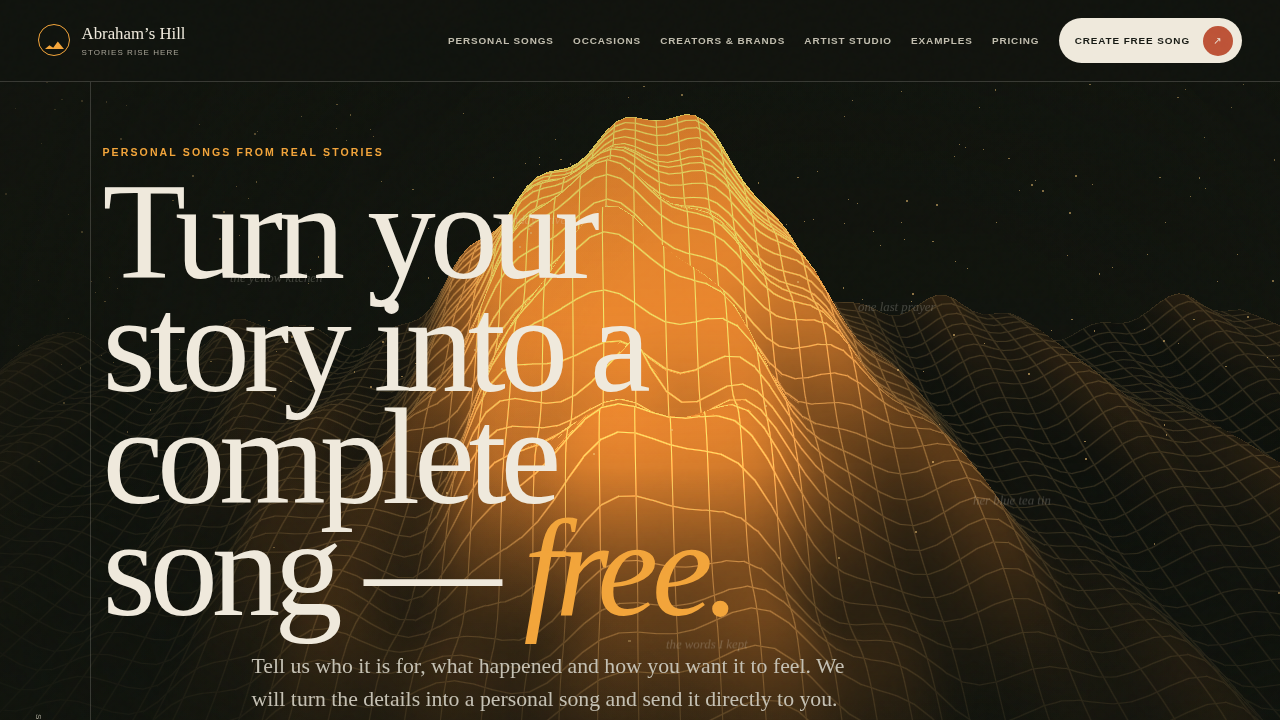
I built the Abraham's Hill website, music catalogue and a five-stage story-to-song studio. The studio gathers the person, purpose, story, must-include details, boundaries, sound, voice, pronunciation and verified contact before creating a private song project.
How it works
A visitor answers one clear question at a time and verifies their email. The brief enters a private queue, generation runs through a controlled adapter with credit caps, and the song must pass a manual quality check before it reaches a protected listening room for lyrics, download and feedback.
What changed
The artist went from struggling for assistance to completing an album, and he has released a song on Spotify. For new visitors, the same system turns a vague request into a detailed creative brief and a real lead that can be followed up properly.
The honest limit
The public music site is live. The newer studio is still a no-index production candidate: payment, legal identity and independent Safari, accessibility and security checks must be completed before a full commercial launch.
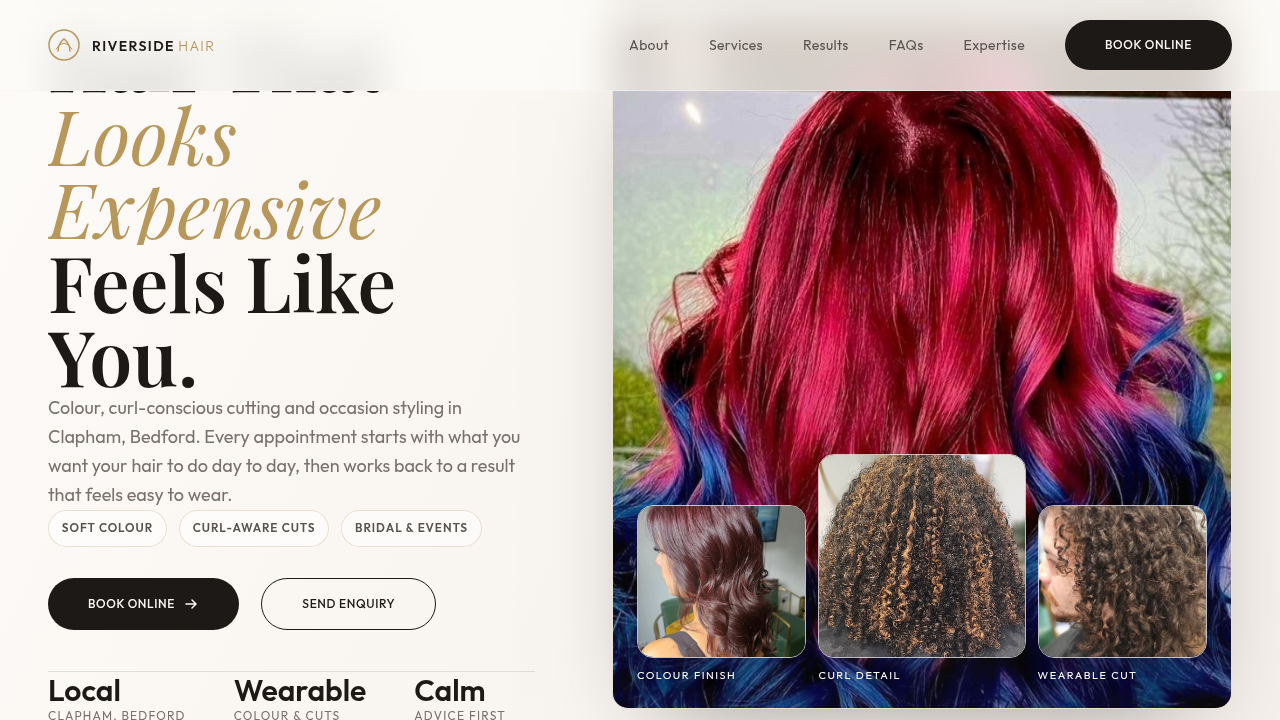
015 service categories
0213 priced booking routes
03Book or enquire
- Service clarity
- Colour, cutting, treatments, bridal and men's grooming each have a clear route.
- Real booking menu
- Thirteen listed appointments range from a £17 dry to £260 extreme blonding.
- Better enquiries
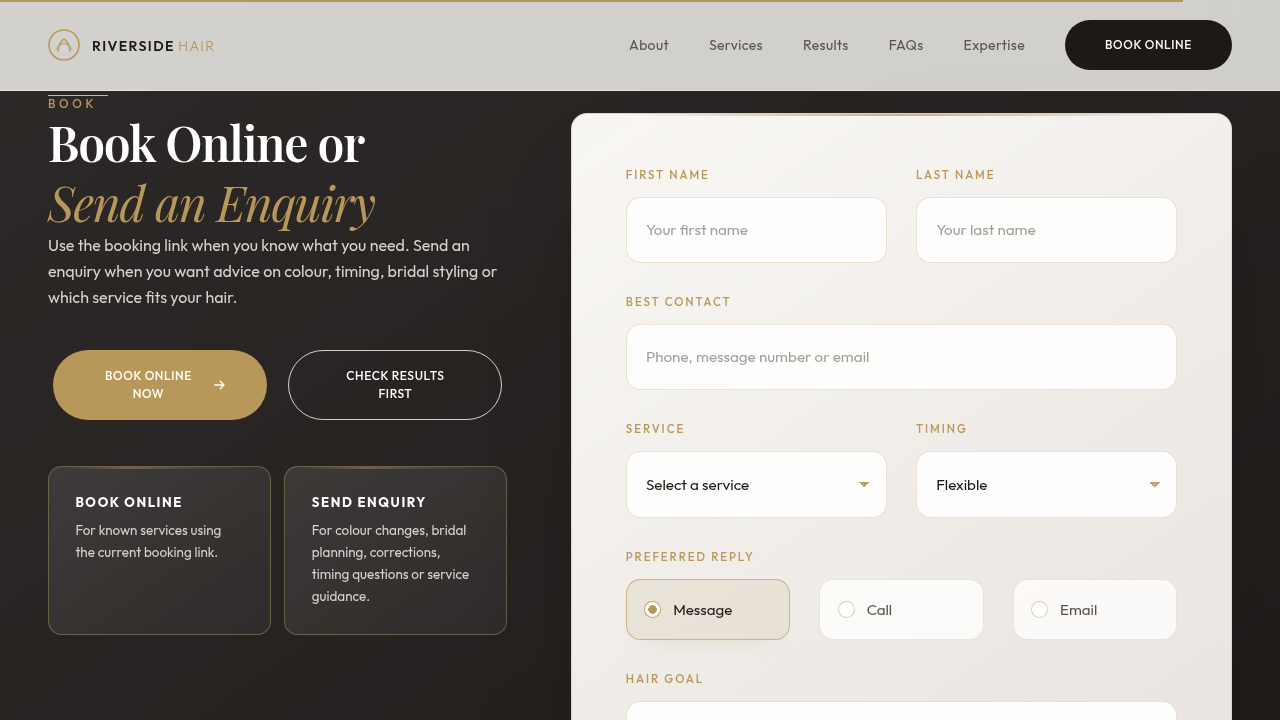
- The form gathers service, timing, reply preference, contact and the client's hair goal.
- Local discovery
- Clapham, Bedford copy and salon, service, FAQ and breadcrumb schema are built in.
The work that needed changing
The salon needed a credible public presence that showed the quality and character of the work without making clients guess which appointment to choose, especially for colour changes, corrections and bridal styling.
What I built and why
I built a complete local service site using real salon photography, five service categories, thirteen priced Timely booking routes, consultation-first service guidance, local search structure and a separate enquiry path for work that needs a conversation first.
How it works
A visitor can browse real results and a service page that explains price, timing, maintenance, suitability and patch-test expectations. Known appointments go to online booking; uncertain, colour-correction or bridal requests gather the hair goal, timing, preferred reply and contact details before preparing the enquiry.
What changed
It gives a small local business a professional shop window and a practical way to collect better enquiries. That is the whole job: no unnecessary AI layer, no grand transformation claim, just less uncertainty between seeing the work and getting in touch.
The honest limit
The site and enquiry flow are built, but the public domain is currently unavailable and the owner controls release. There are no claims here about lead volume, search ranking or revenue that have not been measured.